
Skip to content

Battery storage — the range

Charge cheap. Spend at peak.

A battery holds your solar generation — or cheap off-peak electricity — until the house actually needs it, so less of your power is ever bought at the day rate. These are the systems we design with, and what each is genuinely known for.

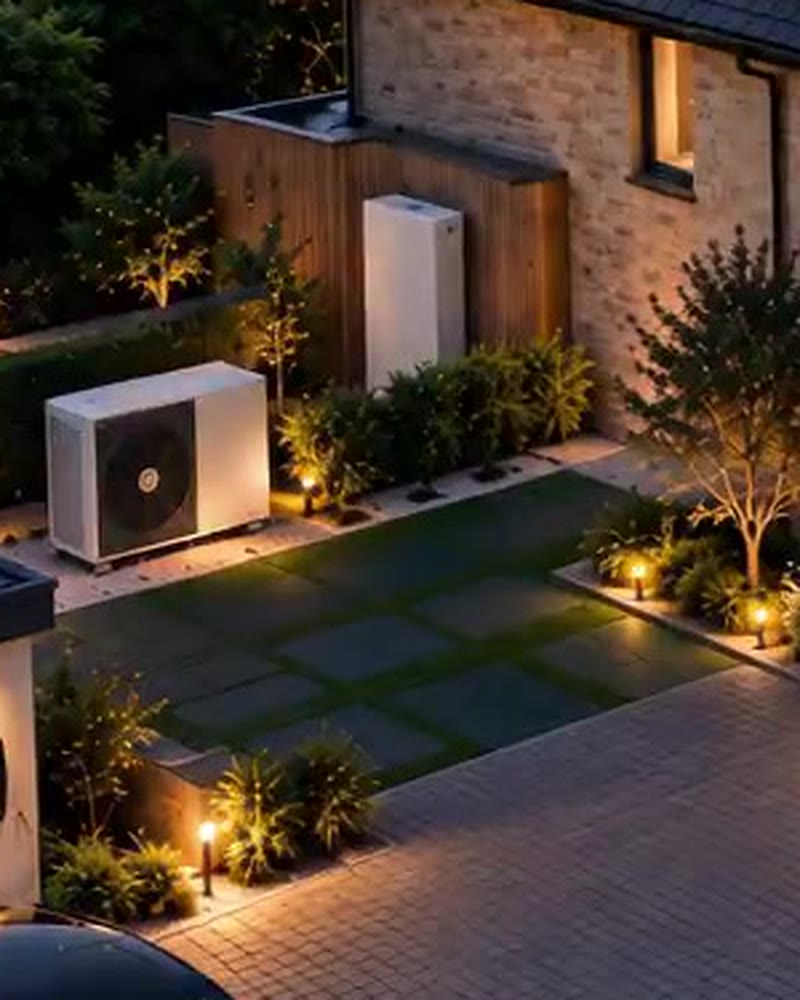
Home battery storage unit mounted on a timber-clad wall beside the heat pump in an evening-lit garden
01

Tesla

Powerwall 3

The benchmark — a solar inverter and battery in one box, with the slickest app in the business.

Bigger homes and bigger solar arrays — the integrated inverter simplifies new installs, and the high output will run almost anything in the house at once.

Usable capacity
13.5 kWh usable
Output power
up to ≈ 11 kW (subject to DNO approval)
Chemistry
LFP (lithium iron phosphate)
Power-cut backup
Whole-home backup with the Backup Gateway
Warranty
10 years
02

GivEnergy

All in One

The British contender — designed in the UK, with class-leading tariff integration and a 12-year warranty.

Smart-tariff households — it speaks fluently to time-of-use tariffs, and UK-based support with the longest warranty here makes it an easy recommendation.

Usable capacity
13.5 kWh usable
Output power
≈ 6 kW continuous
Chemistry
LFP (lithium iron phosphate)
Power-cut backup
Whole-home backup with the Giv-Gateway
Warranty
12 years
03

Sigenergy

SigenStor

The modular one — hybrid inverter and stackable battery modules in a single tower you can grow later.

Homes that will grow into it — start with what you need today and click on more capacity later, with an optional DC EV-charging module in the same tower.

Usable capacity
≈ 8–48 kWh, stackable modules
Output power
≈ 3.6–12 kW by inverter size
Chemistry
LFP (lithium iron phosphate)
Power-cut backup
Backup capable, specified at design
Warranty
10 years
04

Fox ESS

EP / EQ Series

The value pick — dependable modular LFP storage at the sharpest price per kilowatt-hour.

Budget-led projects that still want quality cells and a long warranty — the most storage per pound in the range, paired with a Fox or third-party inverter.

Usable capacity
≈ 5–20 kWh, stackable modules
Output power
≈ 3.6–6 kW by inverter
Chemistry
LFP (lithium iron phosphate)
Power-cut backup
EPS backup circuit option
Warranty
10 years
05

myenergi

libbi

The ecosystem player — from the British maker of the zappi charger, so battery, EV charging and solar diversion all think together.

Homes already running — or planning — a zappi EV charger or eddi solar diverter: one app, one ecosystem, every kilowatt-hour sent where it earns most.

Usable capacity
≈ 5–20 kWh, modular
Output power
≈ 5 kW continuous
Chemistry
LFP (lithium iron phosphate)
Power-cut backup
Backup option, specified at design
Warranty
up to 10 years by component

Figures are manufacturer-published typical values and vary by configuration and grid connection. The right battery is sized from your real usage — evening load, tariff windows and what your solar produces. Oversizing wastes money, undersizing wastes sun; standard bundles do both.

Sized from your usage. Not a bundle.

The battery charges when electricity is cheap or free — from your roof, or overnight on an off-peak tariff — and discharges at peak times. The saving lives in that gap, which is why the right size comes from your evening load and your tariff, not from a standard package.

Oversizing wastes money and undersizing wastes sun. We look at how your household actually uses electricity, choose AC or DC coupling to suit the system, install in a safe ventilated spot and set up the tariff scheduling before we leave.

Book the free survey

Common questions.

Will it run the house in a power cut?

Only if the system is specified with backup capability — most standard setups shut down with the grid for safety. If backup matters to you, say so at survey and we design for it.

Is it worth it without solar panels?

It can be — charging cheap overnight on a time-of-use tariff and using it at peak still cuts bills. It's strongest paired with generation, though.

How long does a battery last?

Manufacturer warranties here run ten to twelve years, and the LFP cells they all use are built to keep the majority of their capacity through it.

Where does it go?

Garage, utility, understairs or an external enclosure — somewhere cool, ventilated and out of the way. It's a wall or floor unit about the size of a small suitcase.