
Installation case study
We do not have a favourite brand.
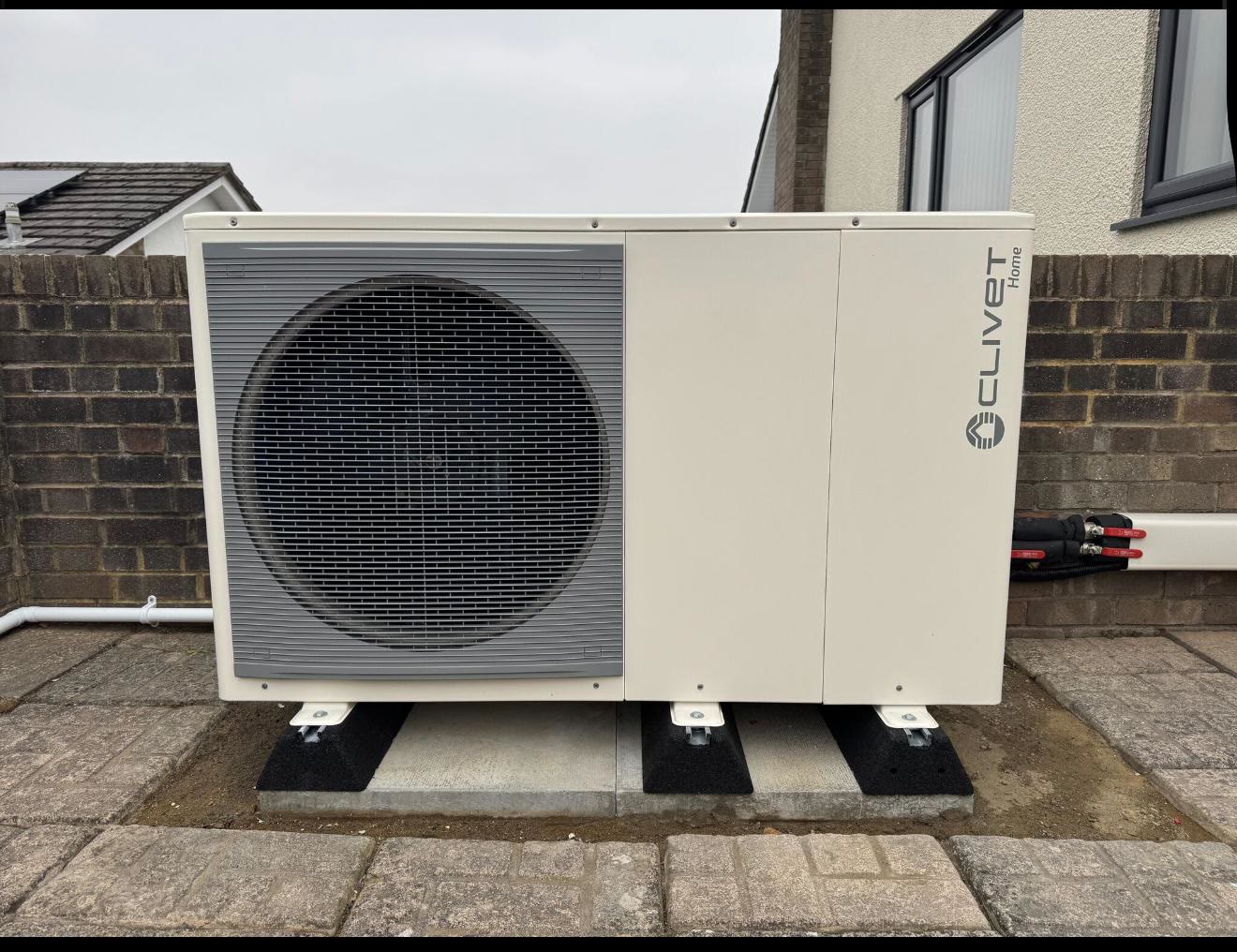
Clivet monobloc — specifying to the property, not the brand
Four case studies, four different manufacturers. Not indecision — the result of specifying against the property every time instead of against a supplier agreement.
- System
- Clivet monobloc
- Refrigerant
- R32
- Format
- Single fan
- Installer
- Elixa Renewables
The brief
Why we did not fit the brand you have heard of
Every mainstream manufacturer makes a competent heat pump. The difference between a good installation and a poor one is almost never which one you chose — it is whether it was matched to the property.
Most heat pump quotes start with a brand and work backwards. Ours start with the property and let the brand fall out at the end, which is how a well-specified system occasionally ends up with a badge the customer has never seen before.
Clivet is not a household name in the UK. It is a Veneto manufacturer with three decades in air conditioning and a partnership with the Midea group, and its monobloc range is widely fitted across Europe. Unfamiliar is not the same as unproven, and brand recognition is not a design criterion.
What actually decides the specification: output matched to the calculated heat loss, with enough modulation range to run down at part load rather than cycling. Physical footprint that suits the space available. Flow temperature capability that suits the emitters already in the property. Performance held at low ambient temperatures, because January is when it matters. Controls the household will actually use. And parts, support and warranty that will still be there in ten years.
The design envelope
- Heat pump
- Clivet monobloc, R32 refrigerant, single fan
- Range available
- 4 to 30 kW; single fan format up to 16 kW
- Design heat loss
- 6–10 kW, typical of a house of this size and build
- Design flow
- 40–50 °C on existing emitters, weather compensated
- Hot water
- 200–250 litre unvented cylinder
- Siting
- Concrete plinth, anti-vibration feet, insulated flexible connections
Confirmed specification where stated. Remaining figures are indicative ranges typical of this class of property and system rather than measured values.
The solution
Five reasons this unit suited this house
Specify to the property, not to the supplier deal. It is the reason our case studies feature four different manufacturers and not one.
None of these are marketing points. They are the things that were checked against the property before anything was ordered.
Single fan, compact footprint
The Clivet range stays single fan all the way up to 16 kW, which keeps the outdoor unit shorter and lighter than a twin fan machine of similar output. On a paved side area with a boundary wall close behind, that is the difference between a tidy installation and a compromised one.
Flow temperature high enough for the existing emitters
The range delivers flow temperatures up to 65 °C. That headroom meant the existing radiator circuit could be assessed at a sensible design temperature rather than the property being committed to a full emitter replacement before anything else was decided.
Performance held at low ambient
The range is rated to produce hot water down to −25 °C outside. British winters do not need that, but a machine designed for harsher climates is not working at the edge of its envelope during a cold snap here, which is exactly when a heating system is judged.
Quiet and super quiet operating modes
Selectable reduced-output modes for evenings and overnight, useful on a property where the unit sits close to a boundary and to neighbouring windows.
Controls the household will use
App control and Modbus connectivity as standard, so the system can be monitored and adjusted rather than set once and forgotten. A control system nobody understands is a control system nobody optimises.
The installation
Level, isolated and accessible
The unit sits on a poured concrete plinth rather than directly on block paving. Paving settles, and a monobloc that goes out of level develops condensate and vibration problems that are tedious to fix later. Anti-vibration feet sit between the frame and the plinth so nothing transmits into the structure.
Primary connections are made in insulated flexible hoses, which absorb residual movement and make future removal for service straightforward. Pipework runs are lagged externally and enter the building at low level with clear access to isolation valves.
Scope of works
Clivet monobloc air source heat pump, R32 refrigerant · room-by-room heat loss calculation and full system design · poured concrete plinth, anti-vibration mounts and levelling · insulated flexible primary connections and lagged external pipework · unvented hot water cylinder sized to household demand · weather compensation and app-based control configured on site · system flushing, inhibitor dosing, balancing and documented handover
Typical performance for a system of this type
3.2–3.8
Seasonal efficiency for a well-designed system on existing radiators
Up to 65 °C
Flow temperature available, giving headroom on existing emitters
A++/A+++
Manufacturer energy class across the range, model and temperature dependent
Typical ranges for this class of property and system, confirmed per project at design stage. Maximum flow temperature and energy class are manufacturer stated capabilities across the range, not recommended design conditions — lower flow temperatures give better efficiency.
If your installer only ever quotes one manufacturer, ask why. It should be because it suited your property, not because it suited their buying.
Want a specification, not a sales pitch?
We size and specify against your property and tell you plainly why the machine we have chosen is the right one for it.