
ThermaSkirt — heated skirting
The skirting board is the radiator.
A discreet aluminium emitter that replaces the skirting boards and warms every room from its edges — walls freed of radiators, floors largely left alone, and a 40 °C flow temperature that lets a heat pump run at its best.
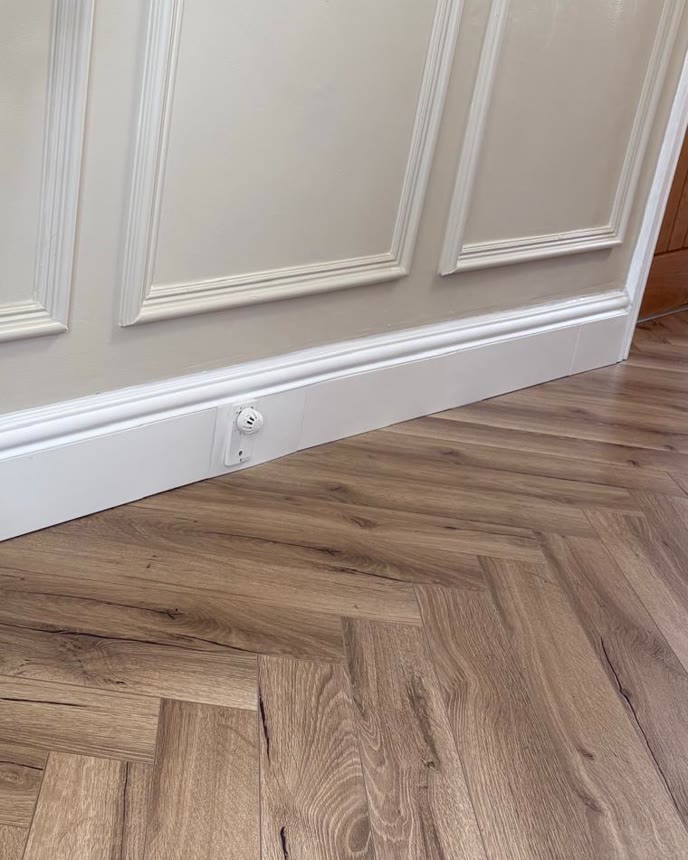
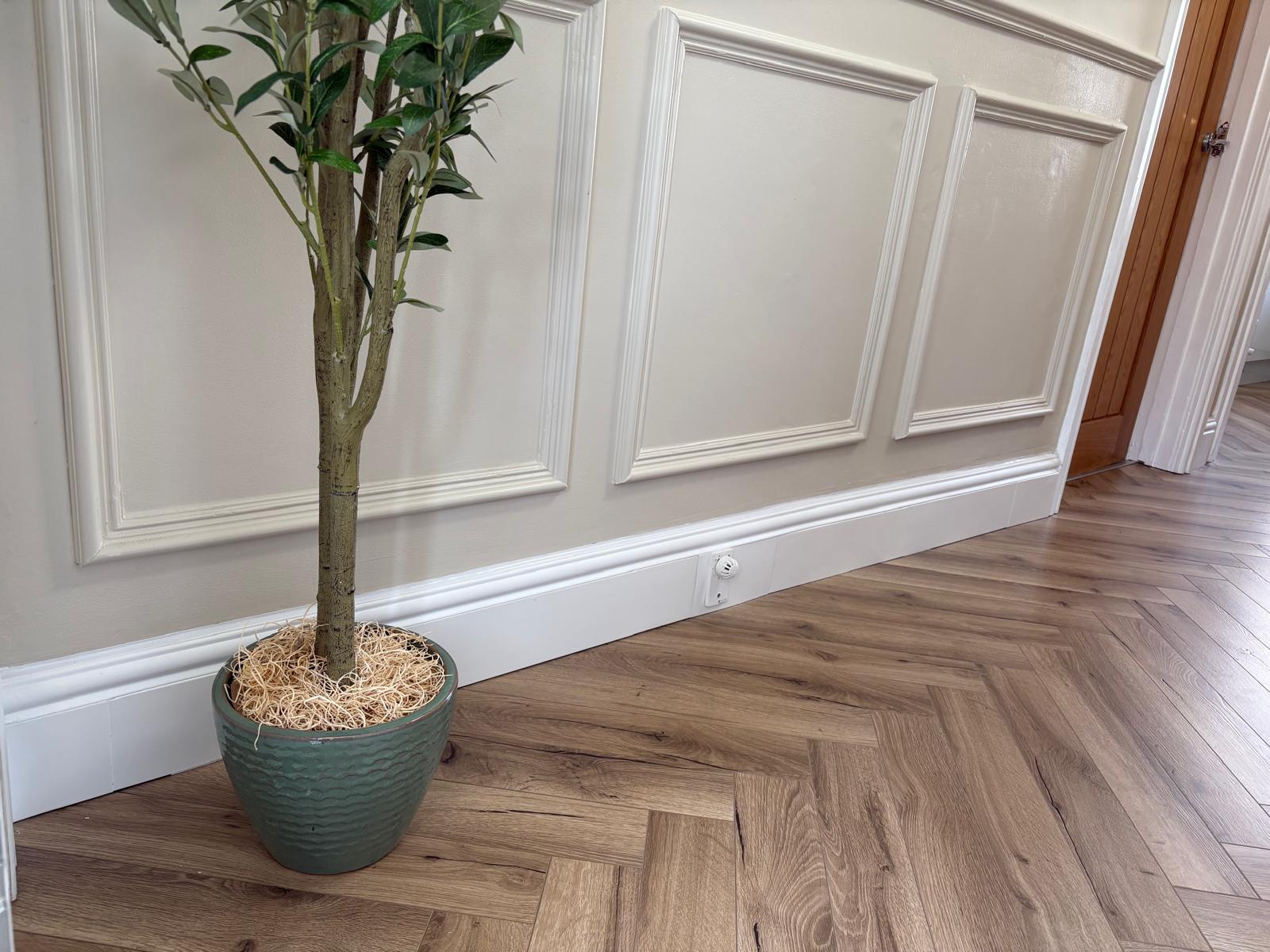
Fitted ThermaSkirt — panelled hallway, herringbone floor, no radiators anywhere.
Technical, in one table.
An aluminium radiant panel built into a 20 mm-deep skirting profile. Warm water — or a self-regulating electric element — runs the length of the room at the perimeter, emitting gentle, even heat where walls meet floor.
Boards click onto concealed brackets with corners, valves and fittings supplied — a whole room converted in hours, with no walls opened and little or no floor lifting.
- Flow temperature
- 40 °C — heat-pump ready
- Heat pump SCOP
- ≈ 4.0
- Output (Deco 115 / 170 mm)
- up to ≈126 / ≈188 W per metre
- Depth off the wall
- just 20 mm
- Lengths
- 2 m · 3 m · 6 m, cut on site
- Electric version
- ThermaSkirt-e, per-room stat
All the low-temperature logic. None of the digging.
ThermaSkirt does the same job as underfloor heating — a large, cool-running emitter feeding a heat pump at its best — but it retrofits by swapping the skirting boards, not the floors. Here's the honest head-to-head.
| ThermaSkirt | Underfloor retrofit | Radiators | |
|---|---|---|---|
| Floors lifted | Little or none — small sections where pipe must cross | Coverings up, overlay laid | None |
| Height added | None | ≈ 20 mm — doors trimmed | None |
| Room converted in | Hours | Days | Hours |
| Walls freed | Yes — radiators gone | Yes | No — panels stay on walls |
| Warm-up | Minutes — low water content | Fast to steady, by system | Minutes |
| Heat-pump flow temp | 40 °C | 35 °C | 45–65 °C by sizing |
Fair's fair: underfloor runs 5 °C cooler and is completely invisible — if your floors are coming up anyway, it's a superb choice. ThermaSkirt is for the homes where they aren't. Compare the underfloor systems →
Warm by teatime
Old skirting off in the morning, boards clicked on by afternoon — a room converted in hours, furniture back the same day.
Nothing lifted, nothing trimmed
Floors, carpets and door heights stay exactly as they are. The only thing that changes is the skirting board.
Walls handed back
Radiators gone from every wall — furniture goes where you want it, not where the panels let it.
Warmth from every edge
Heat enters the room around its whole perimeter, evening out cold spots and keeping outside walls dry where condensation starts.
Quick on its feet
A sliver of water in an aluminium board warms in minutes — no slab to charge, no waiting for the floor to catch up.
Built for heat pumps
Designed around a 40 °C flow — squarely where a heat pump does its most efficient work, without oversizing a single radiator.
Fitted in real homes.
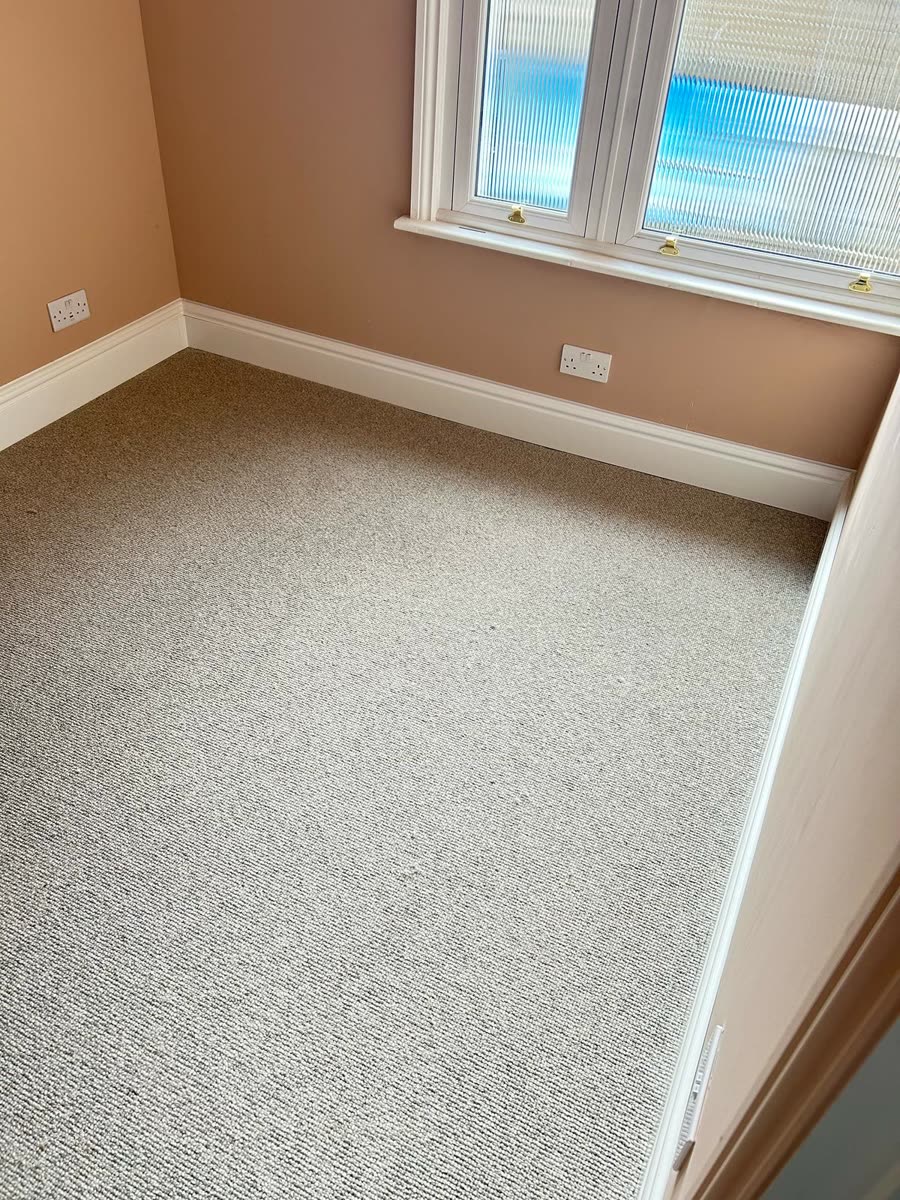
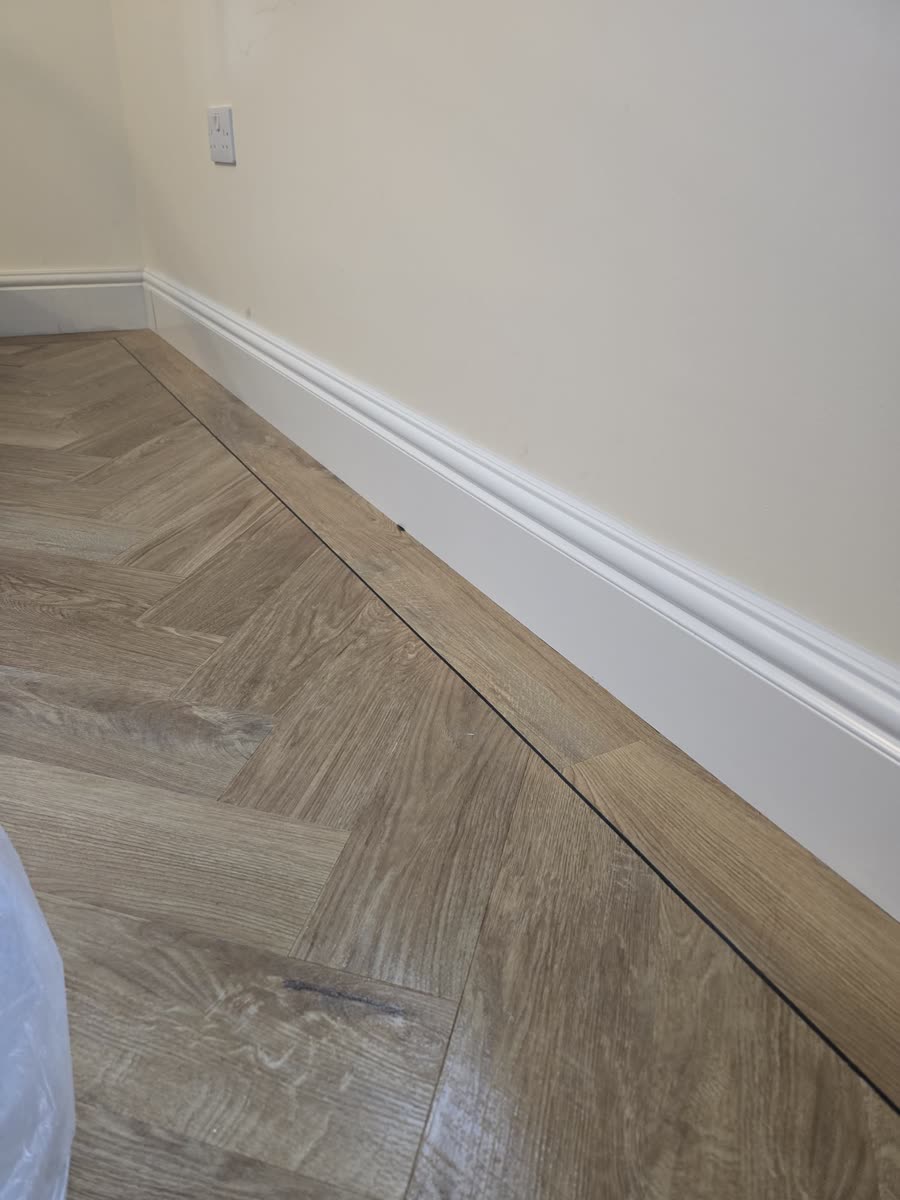
Every photo below is an Elixa ThermaSkirt installation — herringbone, oak, carpet and tile, modern flats and period houses, whole rooms warmed from their edges with not a radiator in sight.
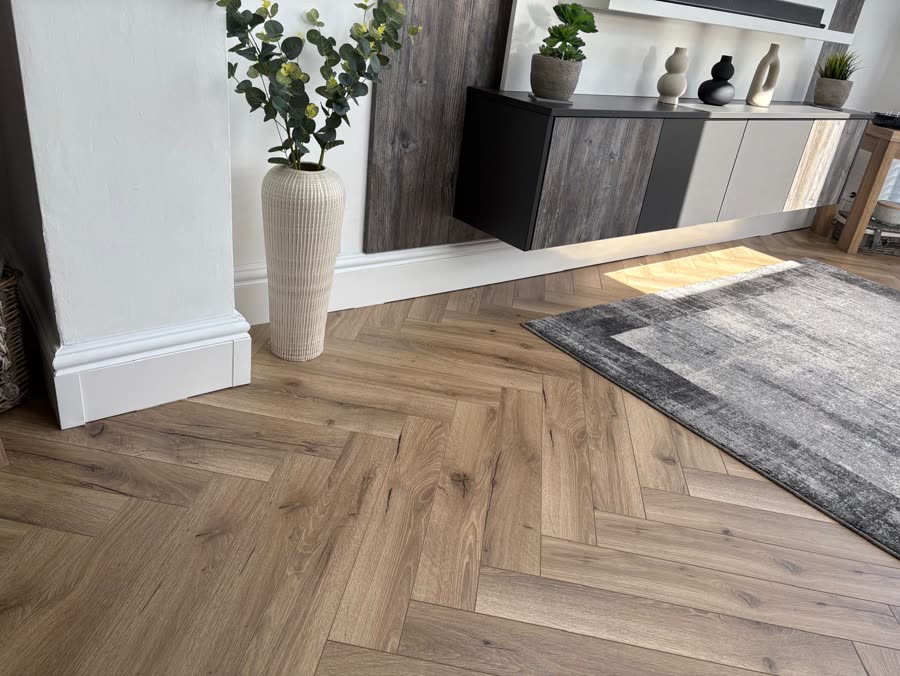
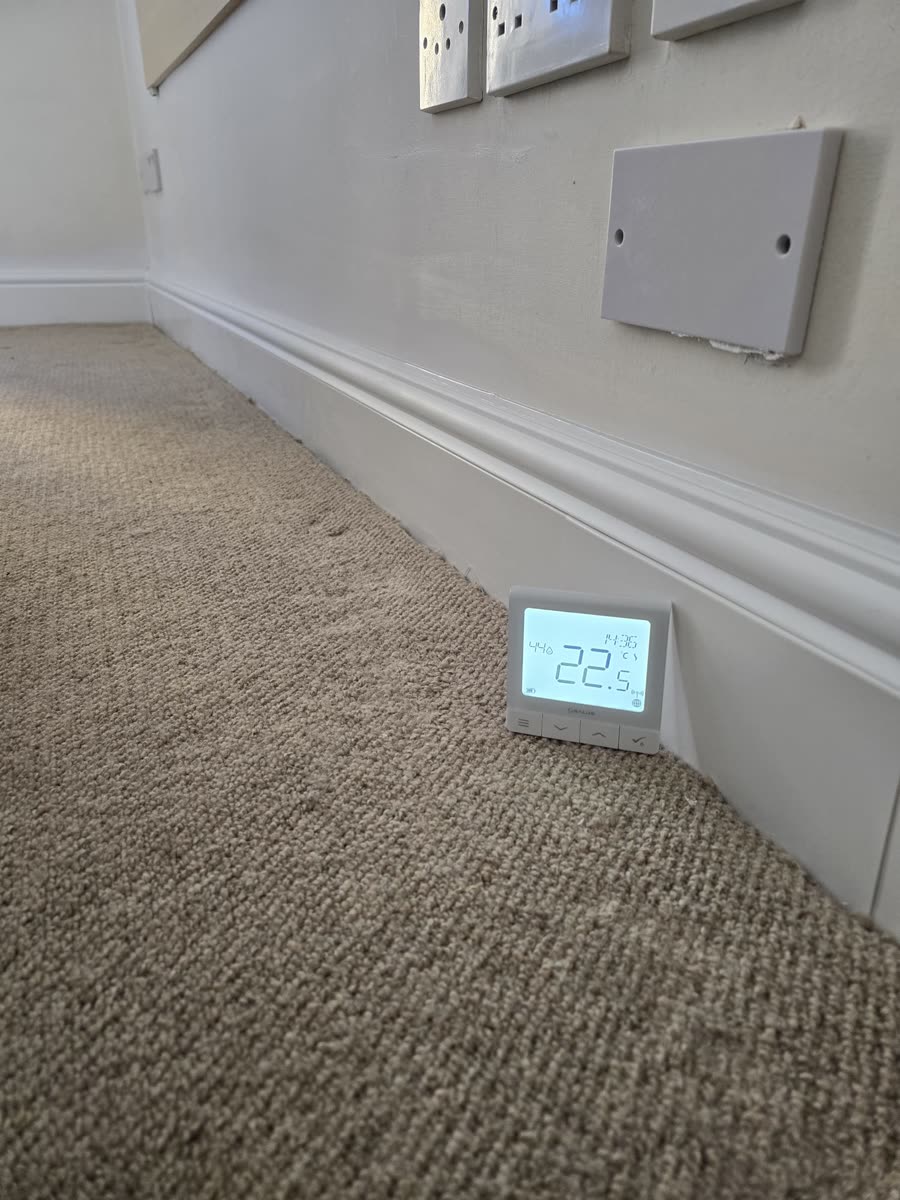
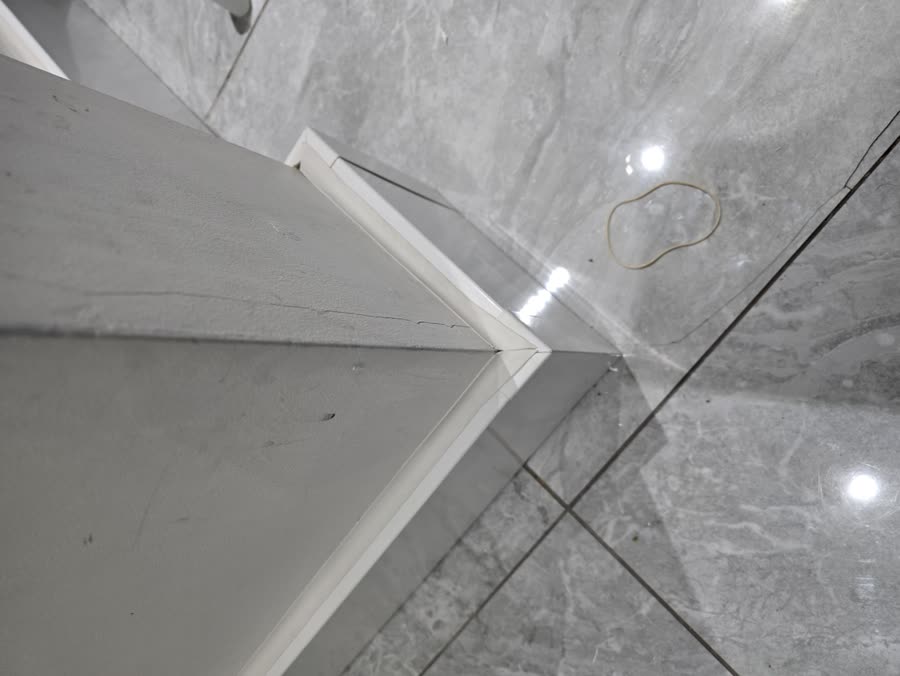
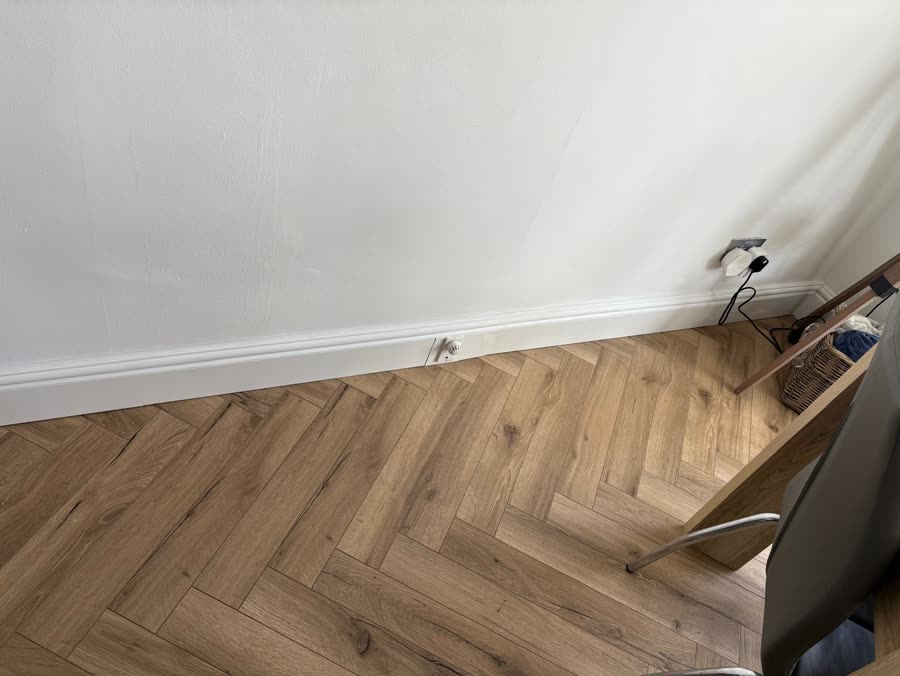
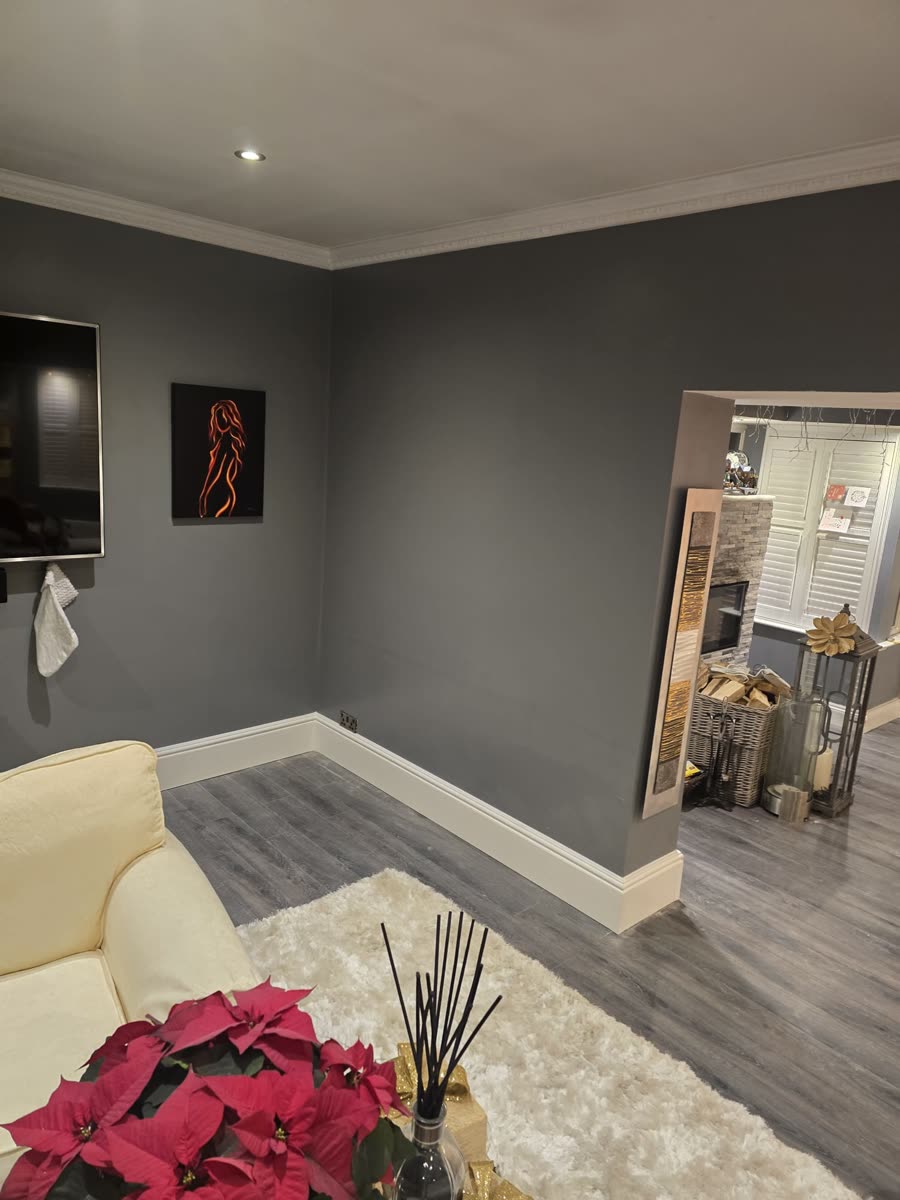
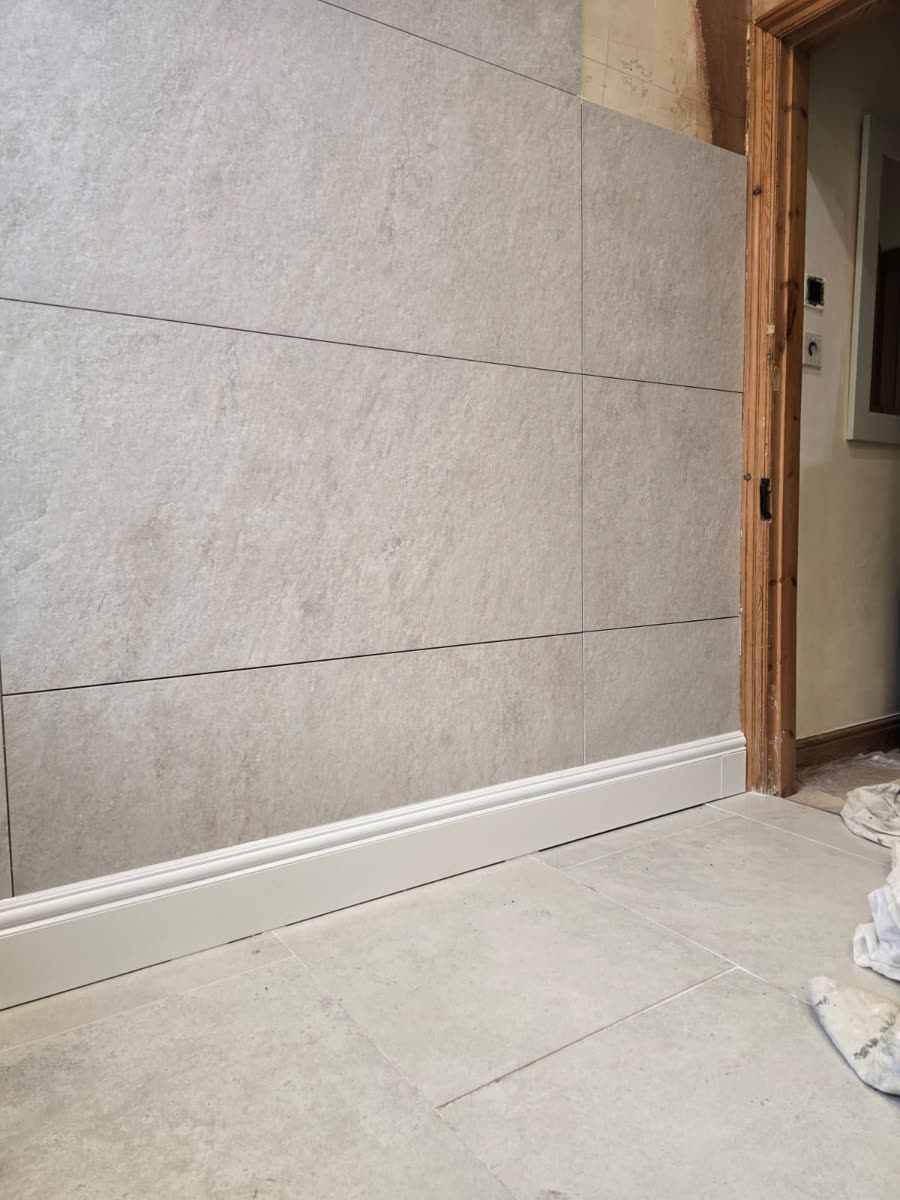
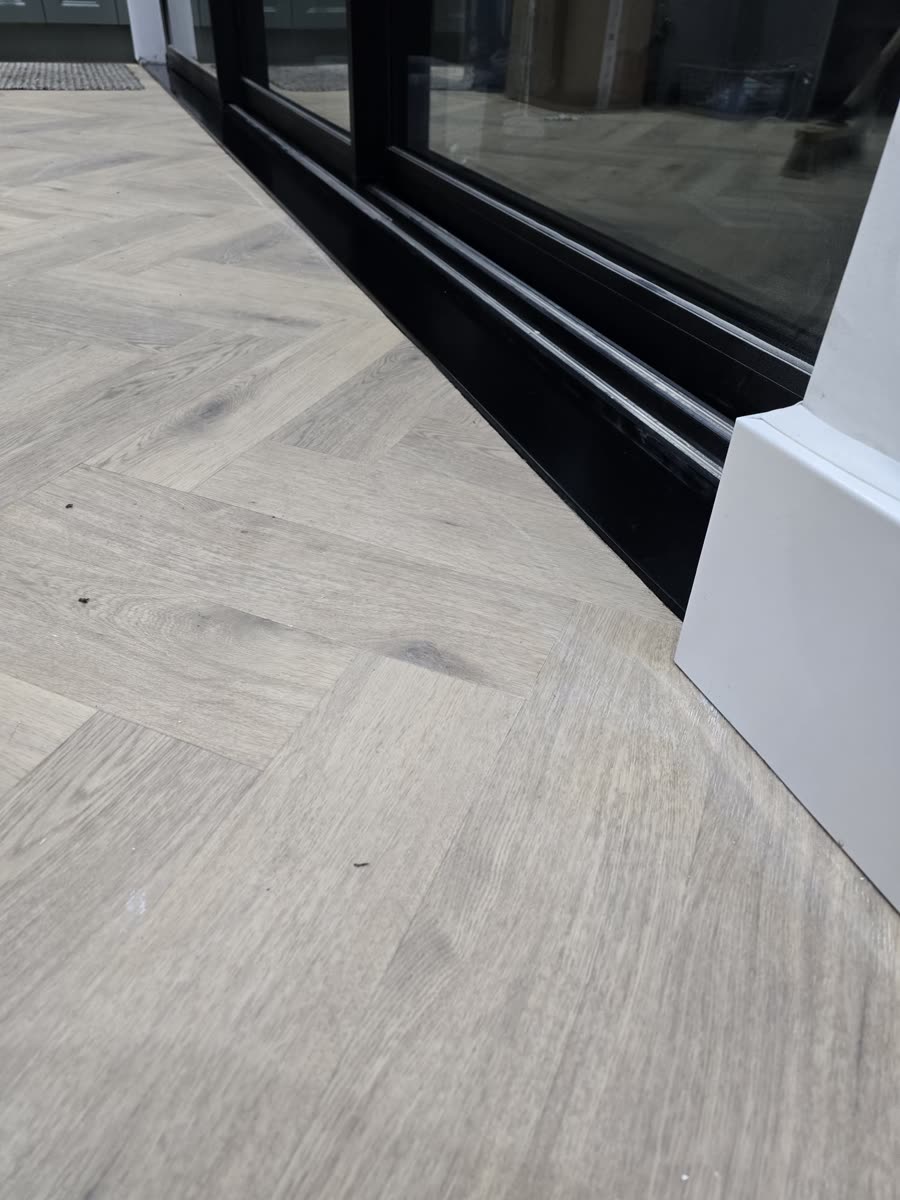
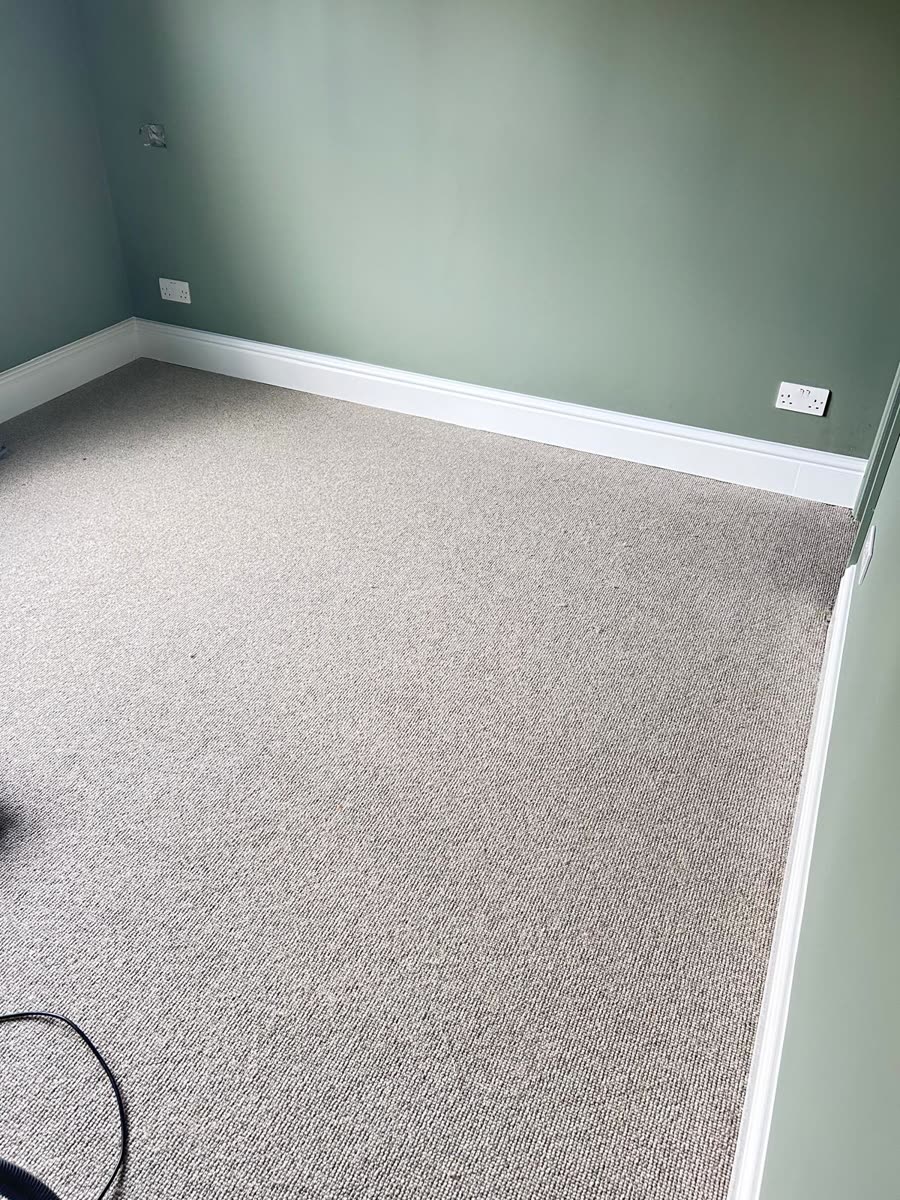
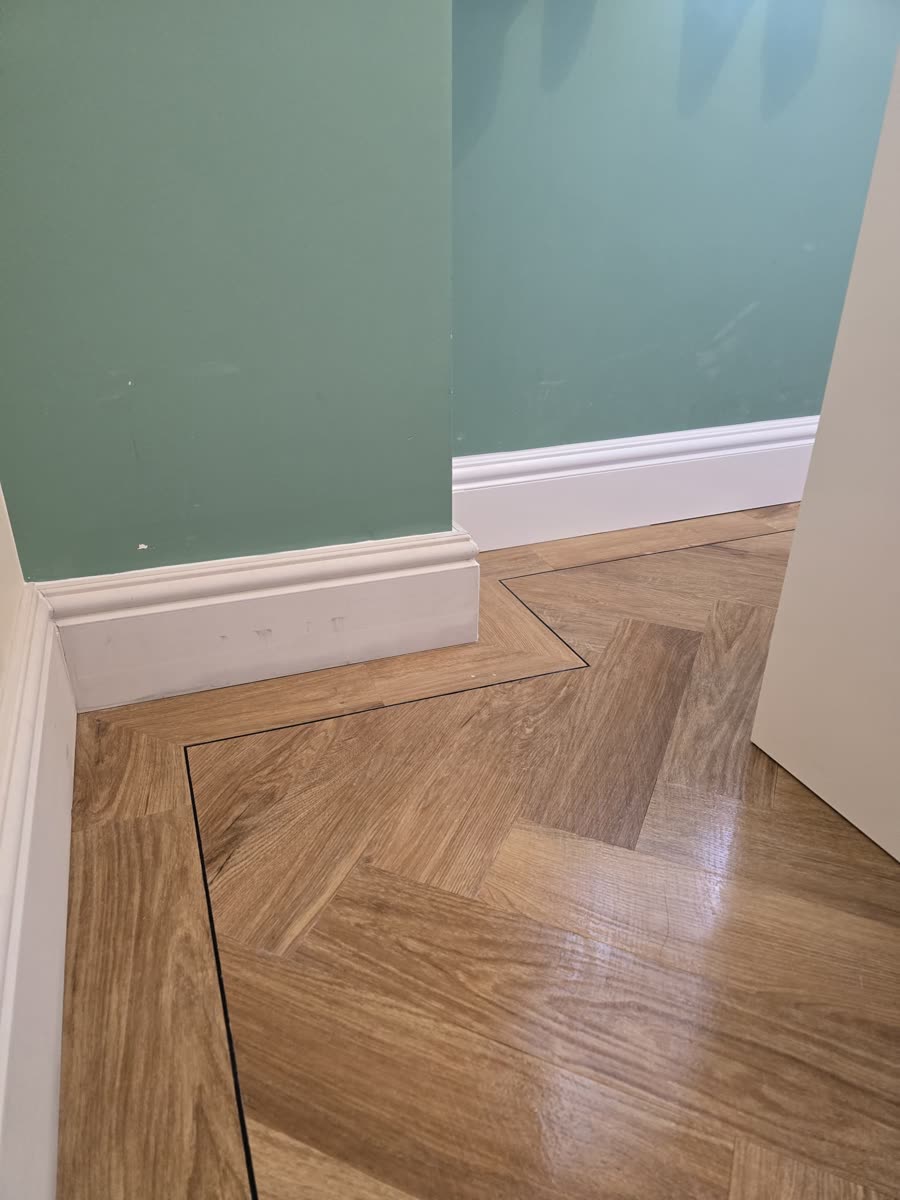
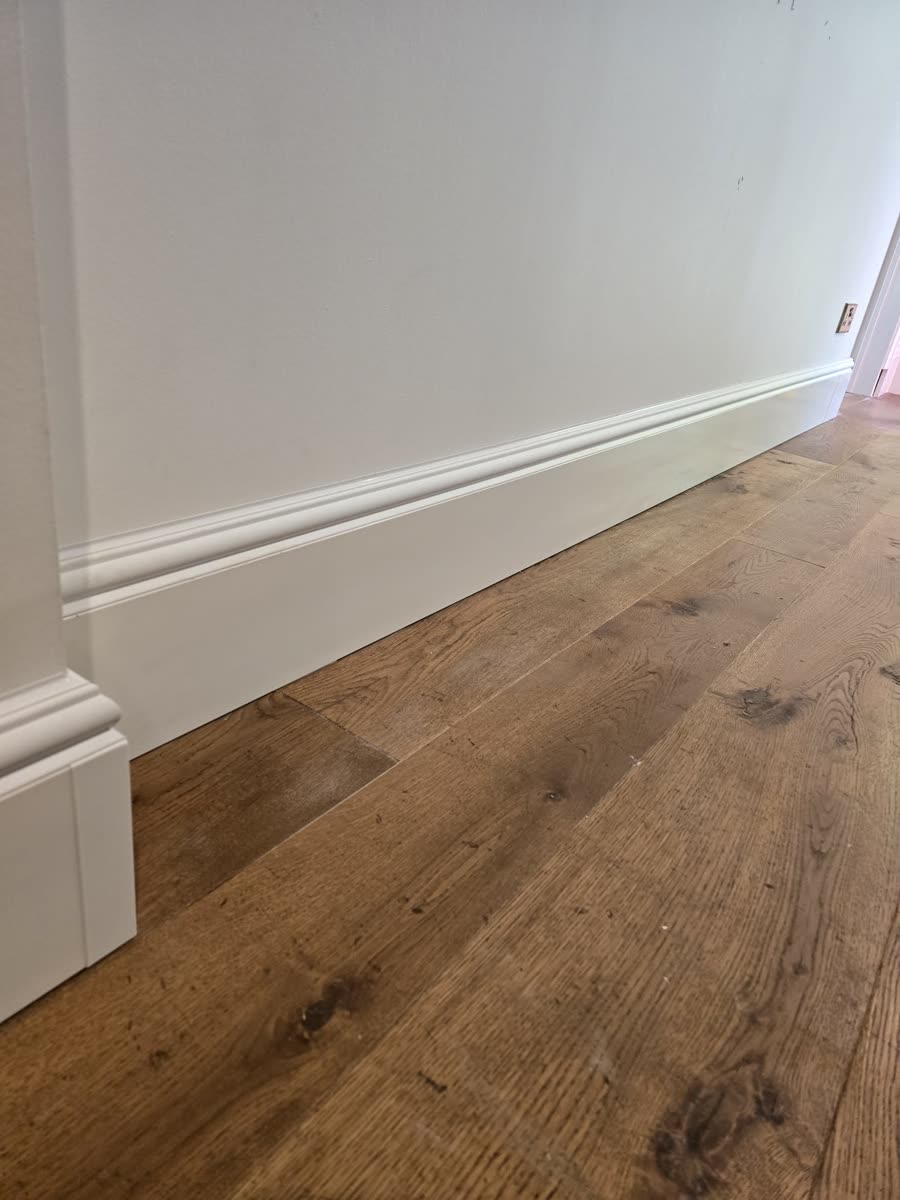
Styles for modern and period homes.
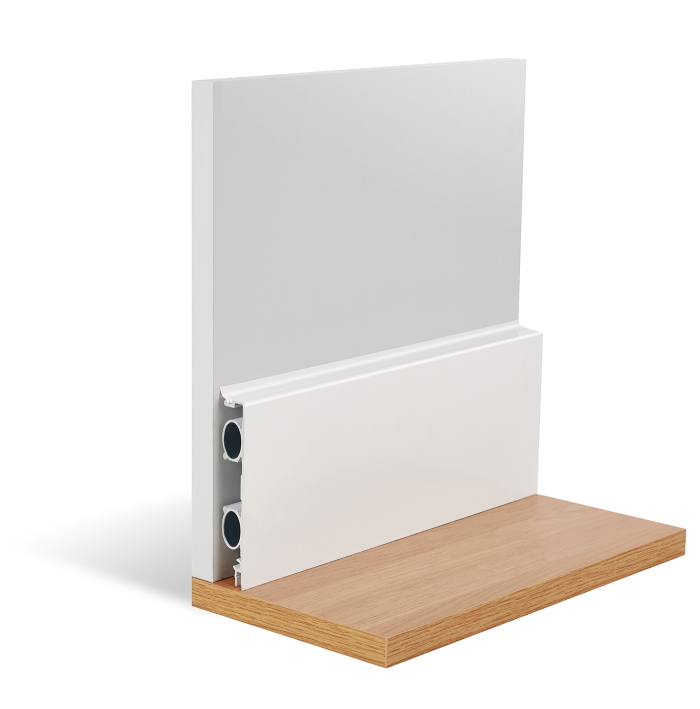
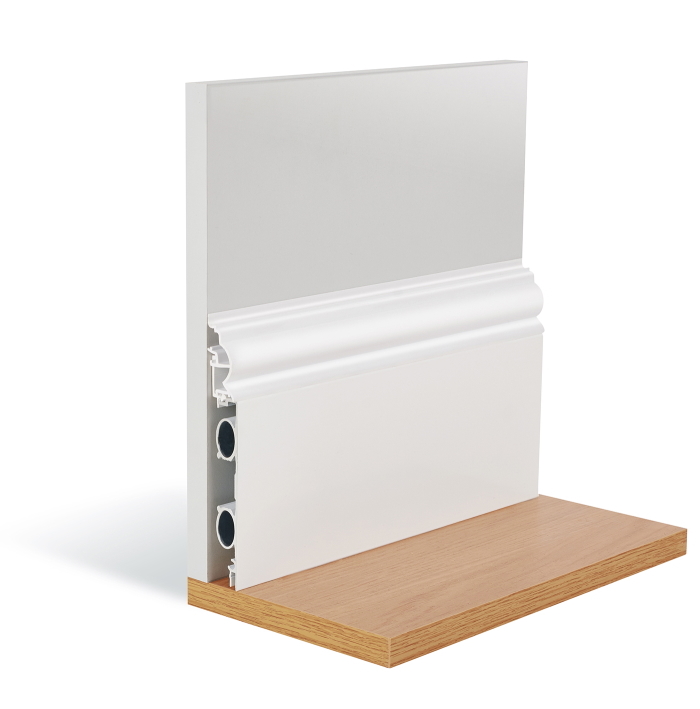
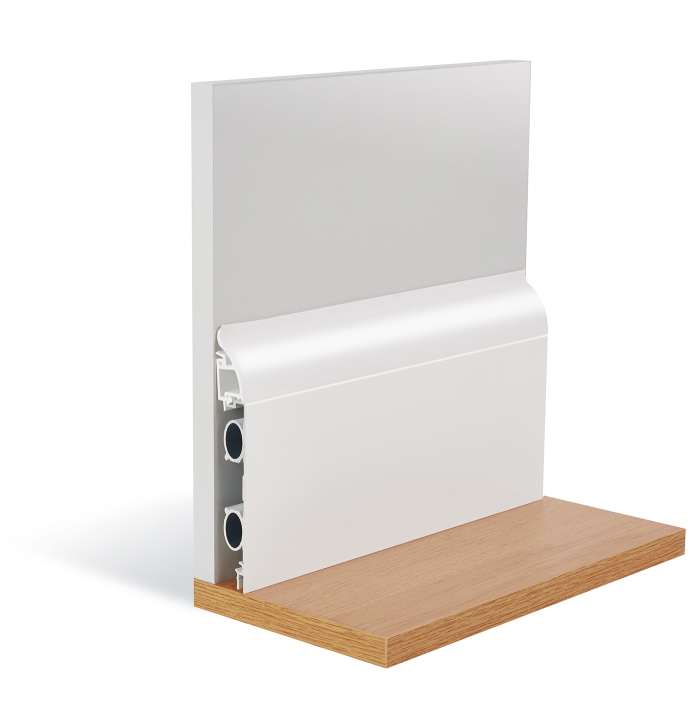
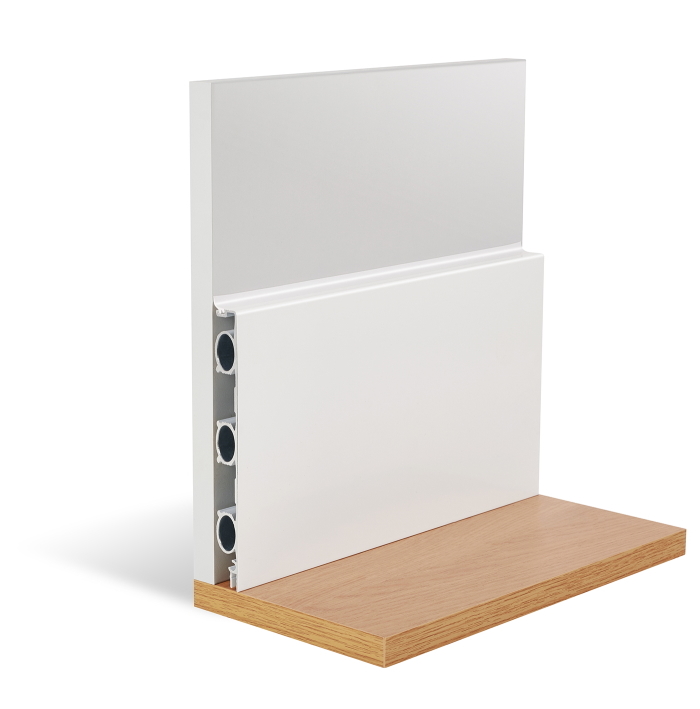
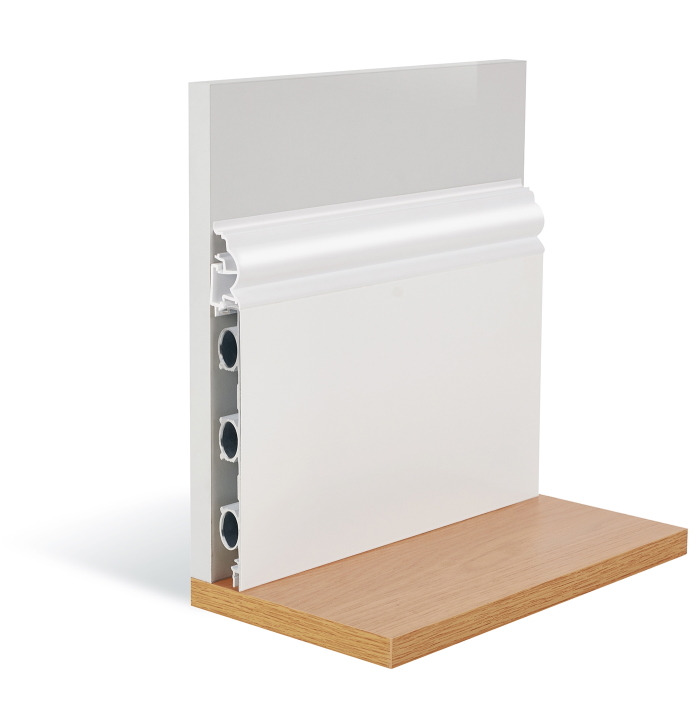
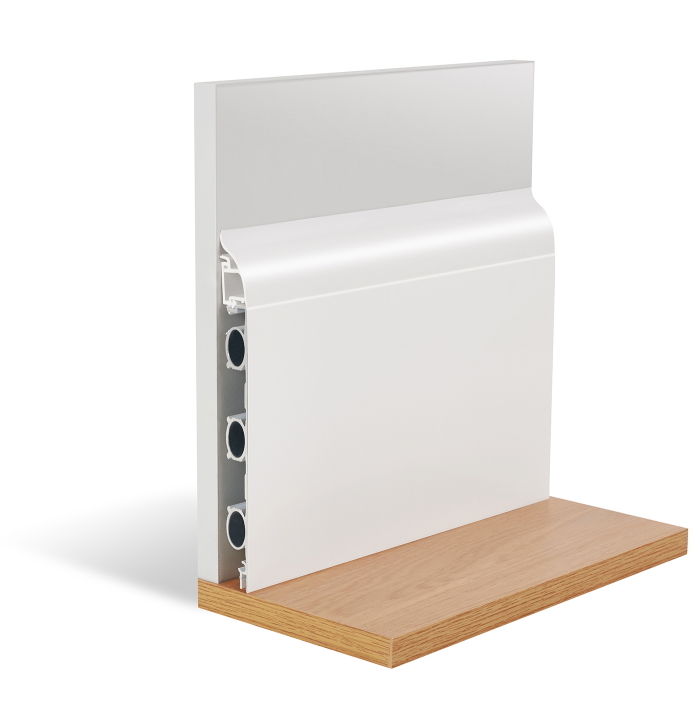
Deco comes in 115 mm and 170 mm heights, both just 20 mm deep, with three top-cap choices — plain, torus or OV. Plain suits a modern room; torus and OV keep the traditional line for Victorian and Edwardian homes where period skirting has to stay period.
Finishes
- Cricket WhiteRAL 9010
- Vintage IvoryRAL 1013
- Anthracite GreyRAL 7016
- Carbon BlackRAL 9011
- Any RAL colourto order
Tough double epoxy powder coat. Swatch colours indicative — samples available with your survey.
ThermaSkirt-e — the electric version
The same boards with a self-regulating electric element inside instead of pipework — it caps itself at around 95 °C, runs from a standard fused spur, and each room gets its own digital thermostat. Ideal for extensions, lofts, garden rooms and homes without a wet system.
Common questions.
How disruptive is the installation?
A room is typically converted in hours — the old skirting comes off, brackets go on, boards click into place. No walls are opened. Floors usually stay down too, though where the pipework has to cross a doorway or reach the next room we may lift a small section — kept to a minimum and put back.
Does it fully replace my radiators?
In most rooms, yes — the perimeter run is sized against the room's heat loss at survey. Occasionally a large or heavily glazed room keeps a supplementary emitter.
Is it safe with curtains and furniture?
Yes — it runs at low surface temperatures, warming the room gently from the edges rather than getting hot like a radiator.
What if I can't run pipework to a room?
That's what ThermaSkirt-e is for — the same boards with a self-regulating electric element, run from a fused spur with its own room thermostat.
Why does it suit heat pumps so well?
It's designed for a 40 °C flow temperature — right in the range where a heat pump runs at its best efficiency (around SCOP 4.0). Cool-running emitters are what make heat-pump economics work.